

Off-Plan Property in Dubai: How It Works and How to Manage It
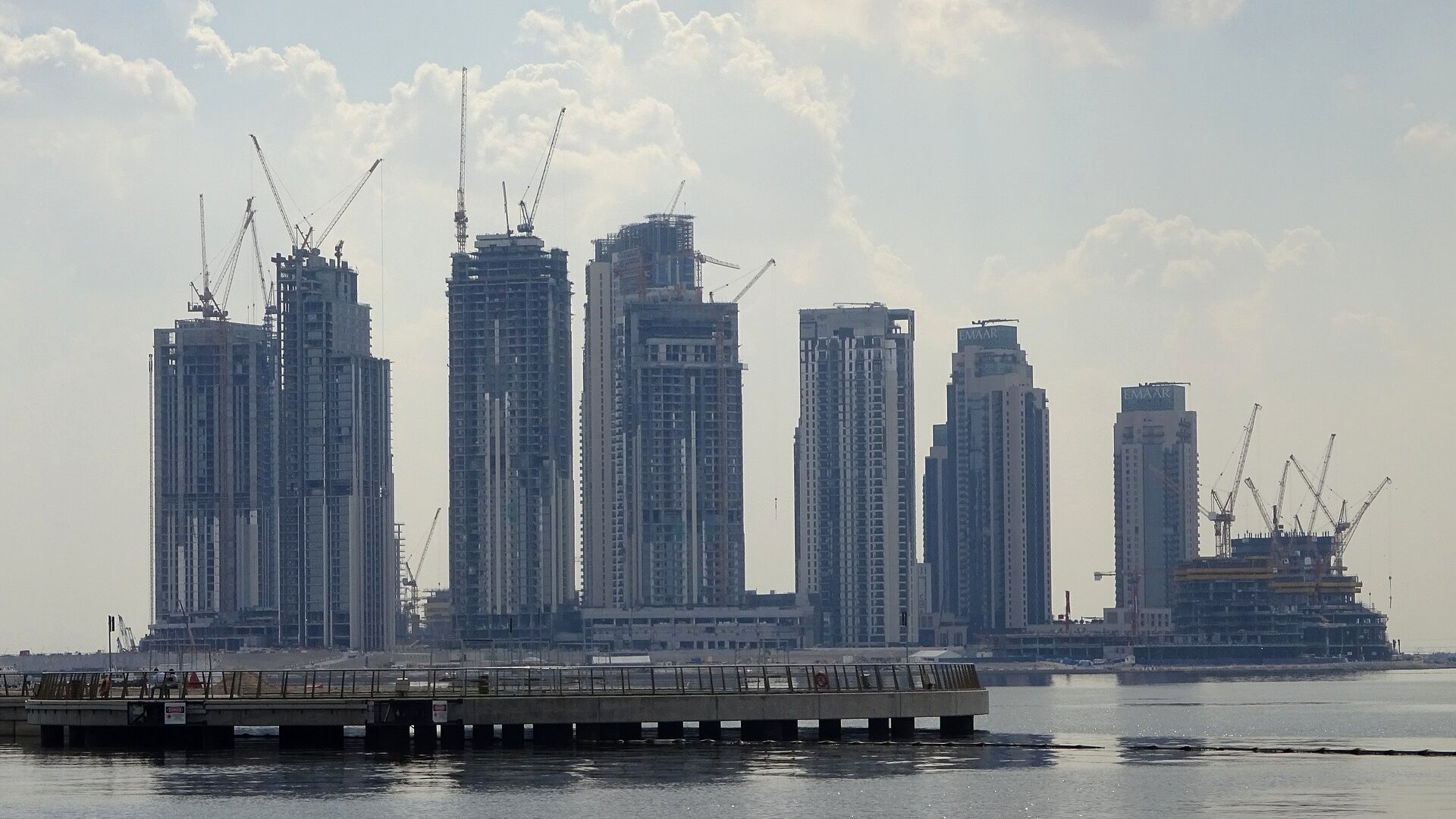
Buying a home in Dubai before it is built sounds risky to many first-time buyers. In reality, off-plan purchases are the backbone of the city's property market, and they are surrounded by some of the clearest buyer-protection rules in the region: project escrow accounts, a public register for every off-plan sale and legal limits on what a developer can keep if things go wrong.
Last week we looked at Dubai for expat families: schools, neighbourhoods and the real cost of living. This practical guide takes the next step. It explains how an off-plan purchase works from reservation to title deed, what payment plans really mean, which fees to budget for, how off-plan property connects to the UAE Golden Visa and how to rent out and manage the unit once you receive the keys.
What "off-plan" means in Dubai
An off-plan property is a unit sold by a developer before construction is finished, sometimes before it has started. You sign a sale and purchase agreement (SPA) with the developer, pay the price in instalments linked to dates or construction milestones, and receive the completed unit at handover.
Three laws do most of the protective work:
- Law No. 8 of 2007 on escrow accounts. Every off-plan project must have its own escrow account opened in the name of the project and dedicated exclusively to its construction (Dubai Legislation Portal).
- Law No. 13 of 2008 on the Interim Real Property Register. Off-plan sales must be recorded with the Dubai Land Department (DLD) through the Oqood system, which gives your purchase legal standing before the building exists (Swiss Business Council UAE).
- Law No. 19 of 2017. It amended Article 11 of the 2008 law and sets the maximum amounts a developer can retain if a buyer stops paying (Dubai Legislation Portal).
You do not need to be a UAE resident to buy. Foreign buyers of any nationality can purchase in designated freehold areas with a passport, and the rules below apply in the same way whether you are an EU citizen, a UK or US national or from anywhere else.
The purchase, step by step
| Step | What happens | What to check |
|---|---|---|
| 1. Due diligence | You check the developer and the project before paying anything | The project is registered with the DLD and linked to an escrow account |
| 2. Reservation | You pay a booking amount set by the developer, directly or through a RERA-licensed broker | The broker's licence and the reservation terms (refundable or not) |
| 3. SPA | You sign the sale and purchase agreement | Payment plan, handover date, specifications, penalties, resale and rental clauses |
| 4. Oqood registration | The developer registers the SPA with the DLD | Registration within 90 days and the 4% DLD fee |
| 5. Instalments | You pay according to the plan | Every payment goes to the project escrow account only |
| 6. Handover | Completion certificate, inspection, final instalment | Snagging list signed before you accept the keys |
| 7. Title deed | The DLD issues the final title deed | Name, unit number and area match the SPA |
According to a step-by-step summary of the DLD process published by EGSH, the developer registers the SPA in Oqood within 90 days of signing, registration takes about one business day, and the final title deed is issued in around six business days once the unit is completed.
Due diligence before you pay
The single most important rule is simple: pay only into the project's escrow account, never into a personal account or a company account that is not the named escrow bank. Brokers are required to tell buyers this, and any request to pay outside that channel is a warning sign (EGSH). Before reserving, ask for the project registration number and the escrow account details and verify them on the DLD's official channels, such as the Dubai REST app.
How your money is protected
The escrow system is what makes off-plan buying in Dubai different from many other markets:
- Buyer payments are deposited into an account opened in the name of the project, not into the developer's general business account (Law No. 8 of 2007).
- Funds are released to the developer against construction progress certified by an approved engineer (Equity Edge).
- After completion, 5% of the escrow account is held back for one year after the units are registered in the buyers' names, as a guarantee against defects (Off Plan Insider).
Note that the 4% DLD fee and any developer administration charge are not instalments of the price and may be paid differently. Ask the developer to confirm in writing which amounts go into escrow and which do not.
Payment plans: what they really mean
Off-plan projects are usually sold with a payment plan written into the SPA. Common structures include:
- Construction-linked plans: instalments fall due as the building reaches set milestones.
- Time-based plans: instalments fall on fixed dates, regardless of progress.
- Post-handover plans: part of the price is paid after you receive the keys, sometimes over several years.
A plan that tracks construction is generally safer than one that front-loads most of the price before the building rises. Post-handover plans ease the cash flow, but remember that the developer remains your creditor after handover, and missing those instalments has consequences.
What happens if you stop paying
If a buyer defaults, the developer must follow the DLD procedure, and the law caps what it can keep. Where the unit is more than 80% complete, the developer may keep the contract and claim the balance, ask for the unit to be sold at auction, or terminate and retain up to 40% of the unit's value. Between 60% and 80% completion, it may terminate and keep up to 40%. Below 60%, once construction has started, the limit is 25% (Dubai Legislation Portal). Any excess must be refunded within one year of termination or within 60 days of resale, whichever comes first.
The practical lesson: choose a payment plan you can comfortably sustain even if your income changes, rather than the most aggressive one on offer.
The costs to budget for
| Item | Typical amount | When |
|---|---|---|
| DLD registration fee (Oqood) | 4% of the price; most SPAs place it on the buyer | At registration |
| DLD knowledge and innovation fees | AED 10 + AED 10 | At registration |
| Developer administration fee | As set in the SPA | At booking or registration |
| Mortgage registration, if financed | 0.25% of the loan | At handover |
| Title deed | AED 250, plus map fee | After completion |
| Service charges | Per square foot per year, set for each building | From handover |
The 4% fee is charged on the full purchase price, not on the instalments already paid (Equity Edge). Service charges for each building are published in the DLD service charge index, so you can compare buildings before you buy (Cevitas). Some developers run promotions that waive part or all of the DLD fee: these are valid only if written into the SPA.
Off-plan property and the UAE Golden Visa
For many international buyers, the property is also a residence route. The investor Golden Visa is a renewable 10-year residence permit for owners of property worth at least AED 2 million (Dubai Land Department). Federal guidance accepts off-plan units bought from approved developers with a total value of AED 2 million or more, and since a February 2026 circular eligibility is based on the value in the title deed or Oqood contract rather than on a minimum amount already paid (Futura Law).
Because practice can differ by case, and Abu Dhabi applies stricter paid-amount rules than Dubai, confirm your specific unit with the DLD before signing if the visa is a key reason for the purchase. Ownership must be in your name; with joint ownership, each owner's share must reach the threshold.
Handover: the snagging inspection
When the developer obtains the completion certificate, you are invited to inspect the unit and pay the handover instalment. Do not accept the keys without a written snagging list: cracks, uneven tiles, poor sealing, air-conditioning performance, water pressure, doors and windows. Many owners who live abroad appoint an independent inspector to do this for them. Defects listed at handover are much easier to get fixed than those reported months later, although the 5% escrow retention gives some extra protection during the first year.
Renting out and managing the property
Long-term rental
Annual tenancies are registered through Ejari, the DLD's tenancy registration system. Rent increases at renewal are capped by the RERA rental index calculator and require 90 days' written notice before the contract ends; rent cannot be raised mid-contract (McCone Properties). Long-term renting offers stable income and lower management effort, and is often the best fit for owners who live abroad.
Short-term rental (holiday homes)
To rent the unit to short-stay guests, the owner or a licensed operator must register in the Holiday Homes system of Dubai's Department of Economy and Tourism (DET) and obtain a permit for each unit (DET Holiday Homes System guide). Requirements include the title deed for a unit allocated to residential use, a DEWA utility bill and insurance covering guest damage (DET leasing guide). Check the SPA and building rules too: if they prohibit short-term letting, a permit will not be issued.
Choosing a property manager
- Check that the company holds the right licence for the activity: RERA for long-term leasing, DET for holiday homes.
- Ask for a written fee structure: management percentage, cleaning, maintenance call-outs, furnishing packages.
- Agree on reporting: monthly statements, photos after each inspection, an annual maintenance plan.
- Make sure rent is paid into your own bank account, with a clear timeline.
The most common mistakes
- Paying a booking fee before verifying the project registration and escrow account.
- Choosing a payment plan that only works if everything goes perfectly.
- Assuming the unit can be rented short-term without checking the SPA, building rules and DET requirements.
- Buying mainly for the Golden Visa without confirming that the specific unit qualifies.
- Accepting handover without a proper snagging inspection.
Our guide to buying property abroad safely covers the checks that apply in any country, and if you are still deciding whether to buy at all, read renting versus buying abroad.
How Hexedes can help
An off-plan purchase is a multi-year project: choosing the right community, checking the developer, reading the SPA, coordinating payments from abroad, preparing the handover and setting up rental or residence. Hexedes coordinates each step with licensed local professionals, so you can make decisions with clear information rather than sales pressure.
Thinking about an off-plan property in Dubai? Book a free introductory call with Hexedes and we will help you assess the project, the numbers and the right route for your plans.






Book your introductory video call
Click the button below and fill out the form to book your call
Book nowYour project starts here
Whether you want to live elsewhere or invest across the globe, hexedes offers you a single point of reference: professional, human and present everywhere. We listen to you, analyse your goal and build the right strategy for you.